
Traumatic Brain Injury Aftercare in Plano
Restore brain function with personalized MeRT when symptoms persist after medical treatment.
Non-invasive, EEG-guided TMS therapy to support recovery from lingering concussion and TBI symptoms.
MeRT: A Breakthrough Treatment of the Long-term After-effects of Traumatic Brain Injuries
When a concussion or traumatic brain injury (TBI) occurs, immediate medical evaluation and treatment are essential. Once acute medical care is complete, many people continue to experience symptoms that interfere with daily life: cognitive fog, mood challenges, sleep disruption, or persistent headaches.
At Brain Treatment Center Plano, MeRT® (Magnetic e-Resonance Therapy) offers a targeted aftercare option designed to help the brain improve communication patterns and function more optimally when symptoms persist after initial medical treatment.
Many people who come to the Brain Treatment Center Plano are already working hard to recover after a traumatic brain injury. They may be participating in physical therapy, cognitive rehabilitation, counseling, or other supportive treatments. MeRT is often used alongside these therapies to help improve underlying brain function and support overall recovery.
Why Immediate Medical Care Comes First
A TBI should always be evaluated right away by a medical professional, including imaging if recommended. MeRT is not an emergency intervention. It’s a follow-on therapeutic option for when brain symptoms linger well after the acute phase of injury.
“I have a whole new lease on life.”
Everything changed when I started treatment. Within two weeks, I was sleeping better. I was off all 12 of the meds I was on when I began treatment, and I was starting to enjoy life again. After the first month, I was socializing with people, I was able to work out for the first time in years, and I started to help my wife with the bills and our budget.
“As I write this, I just completed my sixth week of treatment. A conservative estimate is that I have had a 60–70% reduction of the symptoms I listed above, and I have a whole new lease on life. I can focus and I feel good about myself. I feel confident. And I laugh again. Most importantly, I can feel the love for and from my family again.”
– David, MeRT Patient, after his treatment for lingering effects from a TBI
Understanding Lingering TBI Symptoms
Even after medical stabilization, a TBI can affect:
- Memory, attention, and processing speed
- Emotional balance and mood regulation
- Sleep quality
- Energy and daily functioning
These ongoing effects are often linked to persistent, irregular brainwave activity, which MeRT is designed to address.
Specific symptoms may include:
- Headaches
- Fatigue or lethargy
- Dilated pupils and vision changes
- Dizziness
- Memory problems
- Confusion
- Cognitive decline
- Inappropriate emotional responses
- Anger
- Depression, anxiety, or PTSD
- Weakness or loss of function
- Loss of bladder or bowel control
- Breathing problems
- Numbness and tingling
- Loss of hearing or tinnitus
Success After MeRT Treatment for TBI After-effects
I’m two or three months past my last treatment, and I can honestly say that my brain is in a better place than it was before. The emotional highs and lows that I was living with have stabilized. My cognition took off during that period (of treatment), and it hasn’t slowed down since.”
– NICK HARDWICK, RETIRED NFL CENTER
How MeRT Helps
MeRT is a tailored, highly individualized form of TMS (transcranial magnetic stimulation). We tailor magnetic stimulation to your unique brain patterns, identified through a detailed qEEG analysis. This individualized protocol supports healthier connectivity and communication across brain regions, potentially reducing lingering symptoms and improving quality of life.
The MeRT Process
- qEEG Brain Mapping – non-invasive assessment of brainwave patterns
- Personalized Treatment Plan – tailored to your needs
- MeRT Sessions – gentle magnetic stimulation over several weeks
- Ongoing Monitoring – repeat assessments to track progress
MeRT is a non-pharmaceutical and non-invasive treatment.
MeRT Treatment for TBI Aftercare: Research & Evidence
This approach is a specialized form of rTMS (repetitive transcranial magnetic stimulation) informed by rigorous scientific investigation. While research is ongoing, multiple studies show that rTMS-based protocols can improve mood, cognition, and other post-concussive symptoms after TBI. Here are just a few of them:
The use of repetitive transcranial magnetic stimulation (rTMS) following traumatic brain injury (TBI): A scoping review:
“Evidence suggests that rTMS has the potential to be an efficacious therapeutic intervention for multiple symptoms after TBI, including depression, dizziness, central pain, and visual neglect.”
Neuromodulatory Interventions for Traumatic Brain Injury
“In this special issue of the Journal of Head Trauma Rehabilitation, we share with readers some of the latest advancements in neuromodulation specific to TBI, while providing the framework to further our understanding of how and why functional skills are likely improved. While neuromodulatory interventions can play a critical role in functional recovery for those with TBI, the heterogenous nature of TBI means that clinical implementation of neuromodulation will require understanding, at the individual and group levels, of how, when, and where to alter brain activity to support sustained recovery of sensory and higher order functions.”
The role of transcranial magnetic stimulation in treating depression after traumatic brain injury
“This study suggests that rTMS is a potential treatment option for depression following TBI. Both 15 to 16 session and 30 to 38 session cohorts showed significant decreases in depression as measured by PHQ-9 following rTMS treatment. These findings support the use of rTMS in post-concussion depression treatment and highlight the need for more research on rTMS therapy following TBI.”
Randomized trial of rTMS in traumatic brain injury: improved subjective neurobehavioral symptoms and increases in EEG delta activity
“Subjective measures of depression, sleep dysfunction, post-concussive symptoms (PCS), and executive function showed significant improvement with stimulation, retaining improved levels at two-week follow-up. EEG delta power exhibited elevation one week after stimulation cessation.”
Neural mechanisms of emotional health in traumatic brain injury patients undergoing rTMS treatment
“Our findings uncover the neural mechanisms underlying the improvement in emotional well-being in TBI due to application of neuromodulation. The main effect of rTMS is to reduce emotional disorders and hence consequently it may improve cognitive and executive functions.”
Low frequency transcranial magnetic stimulation for cognitive recovery after traumatic brain injury: A case report
“Our results are consistent with studies showing improved cognitive functioning in TBI following a unilateral or bilateral rTMS protocol that used low frequency rTMS over the right DLPFC. Therefore, this stimulation site may be promising for improving cognitive recovery in TBI, especially when combined with cognitive rehabilitation.”
Repetitive Transcranial Magnetic Stimulation for Treatment of Depression in a Patient With Severe Traumatic Brain Injury
“Case Report: A 37-year-old male with history of anxiety and bipolar depression incurred a TBI after a 60-foot fall. After his physical recovery, the patient had refractory depression. Eight months after the TBI event, he underwent a 6-week course of rTMS treatment and had a 70.8% improvement in mood symptoms by the end of the therapy as indicated by the Patient Health Questionnaire-9, transitioning from severe to mild depression according to the scoring system. Clinical correlation during the months following conclusion of rTMS therapy showed no signs of remission or adverse side effects. The patient remains stable and lives independently 1 year after treatment with mood-stabilizing medications.
“Conclusion: This case provides evidence for successful treatment of refractory depressive symptoms after severe TBI with the addition of rTMS to psychotherapy and mood-stabilizing medications, supporting the safety and tolerability of this novel therapeutic approach. Further studies are needed to validate the contribution of rTMS for management of mood symptoms in patients with TBI.”
MeRT Treatment Featured on The Broken Brain Podcast
The Broken Brain Podcast explores the inner workings of the brain and body. One episode featured MeRT as a breakthrough treatment for various neurological issues, especially Traumatic Brain Injury.
Dr. Eric Won from Wave Neuroscience (the parent company of MeRT) speaks about using MeRT treatment with military members who have experienced depression, TBI, and PTSD from serving their country. Dr. Won also gives testimony to the incredible successes of these veterans after treatment.
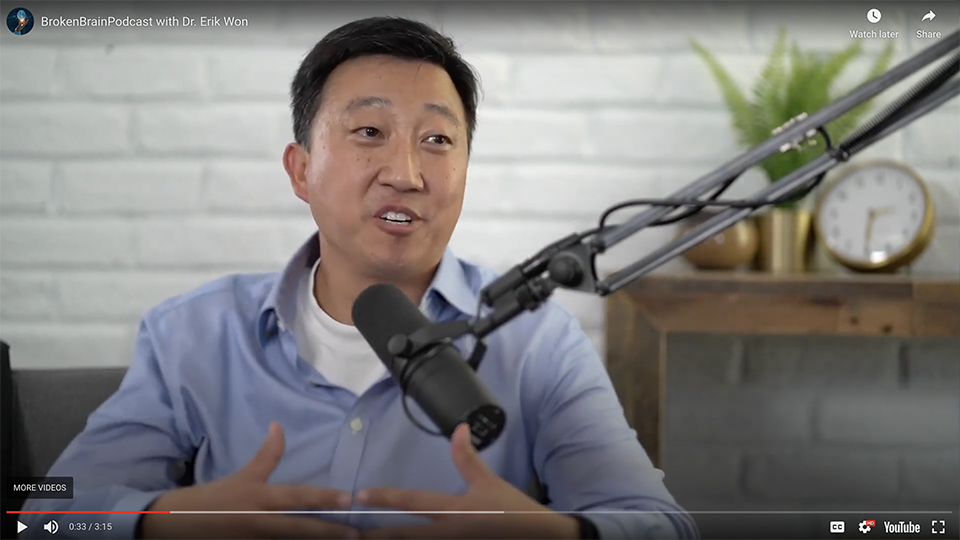
Success from TBI Treatment using MeRT
More Testimonials from TBI Patients
“I’m back! My TBI turned me into someone I barely recognized. I was depressed, mean, and short-tempered. I pushed through life filled with frustration and a deep sense of sadness that this was it. And I just had to keep pushing through life with an overwhelming tiredness.
“I’m so glad I was wrong. I think my direct reports and family are even more thankful. This treatment changed everything, and I am forever thankful.”
41-year-old male with TBI
“I was offered the opportunity to attend the BTC to help with the effects of the TBIs I had endured over 21 years of Military Service. And I am absolutely glad I did so — I felt the positive effects of the treatment in the first 3 days.
“I had irritability issues, although California Traffic will do that to you, and sleeping issues, among other things. On Day 3, I started sleeping through the night. And not just sleeping, but sleeping hard and dreaming. So I know I was in R.E.M. sleep.
“It has helped me focus, feel more energetic, less irritable, more caring to others, and helped with joint pain and tinnitus. The staff is also very amazing and extremely professional. I highly recommend the BTC. Trust the process, and you’ll have the same results as I did.”
=TBI Patient
Patient“I did six weeks of therapy at the Brain Treatment Center. I started therapy with anxiety and depression due to traumatic brain injury. After the third week, it felt like a weight was lifted off my shoulders. I started to have ah-ha moments, but it was about things I already knew.
“The therapy allowed me to clear my brain and concentrate on things. I was no longer spiraling about things that really didn’t matter but seemed real at the time. Thank you for my life back.”
TBI Patient
“The team at the Brain Treatment Center are the most genuinely kind people you will ever meet. And the MeRT treatment has made a HUGE quality of life positive change for me.
“I am a vet who got blown up a couple of times and I suffer from TBI and PTSD. These sessions have turned my life around. My wife notices the positive changes in my depression, anxiety, and irritability and says I am fun to be around again.
“I can’t say enough great things about this place. Thank God it exists!”
Cyrus B.
“I’ve made significant progress in cognitive ability, stress tolerance, and mental clarity. I have been able to handle decisions much better and think clearer. And I have been able to significantly decrease conflict with my family and actually lead much better.”
Male with TBI
“In the ensuing months after the concussion, I just wasn’t myself. My academics began to suffer as well. I didn’t feel right. My EEG showed me that something had physically changed with how my brain functioned.
“After three days of treatment, I felt substantially better. After two weeks, I felt like I did before my injury. MeRT was life changing.”
21-year-old female with TBI
“I’d just always ‘outworked’ it. After the last concussion, that wasn’t an option, even though I had previously walked off a dozen concussions. It’s vital to know that not all TBIs result in massive concussions, but they all add to the erosion of the mind and self if untreated.
“Through EEG, MeRT, and some subtle sleep and attention shifts, I’ve had a radical, nourishing, strengthening, and dare I say, ‘healing,’ that has brought me to see life through a filter I’ve never known was available.
“Giving life a chance is sometimes just staying in ‘the Try.’ If you are damaged, confused, and at the end, know that you have allies that you’ve never met before.”
Tait Fletcher
Stunt PerformerOur Medical Director
Dr. Spencer O. Miller, a Neurologist in Dallas, Texas, is the owner and Medical Director of Brain Treatment Center Plano. He received his medical degree from the University of Mississippi School of Medicine and has been in practice for 12 years. He spent five of those years in the US Air Force, where he saw many brain injuries, including soldiers suffering from PTSD and TBI.
Dr. Miller now specializes in MeRT treatment of traumatic brain injury, depression, post-traumatic stress disorder, dementia, autism, and multiple other brain disorders at his clinics, the Brain Treatment Centers in Dallas, Plano, and Fort Worth.
Dr. Miller is affiliated with Baylor University Medical Center, where he specializes in stroke, headache medicine, traumatic brain injury, post-traumatic stress disorder, and seizures. He is also associated with the Texas A&M Science Center College of Medicine.
He also speaks multiple languages, including Spanish.
Contact Our New Patient Coordinator for More Information
Our New Patient Coordinator is here for you. During your consultation, she will take the time to answer any questions that you may have, listen to your concerns, and carefully explain all the details and information you need.
If, after talking to her, you are interested in further exploring whether you could benefit from MeRT, the next step would be to schedule an EEG and a consultation with our doctor.
With thorough diagnostics, the doctor can show you what is happening in your brain and what may be causing the issues. At this point, we can determine whether you (or your loved one) may benefit from MeRT Treatment, and you can decide if you would like to move forward.
Call our New Patient Coordinator
Or fill in the form below.
Life Can Be Better
You or your loved one can be at peace and enjoy life. With so many successful treatments of a wide range of neurological conditions, we encourage you to explore the possibilities of MeRT Treatment. It can have a lasting impact — and an improved quality of life!

Contact Form
Insurance Coverage and Payment Options
Currently, rTMS is FDA-cleared for the treatment of Depression. We can provide all required paperwork at the end of your treatment so you can submit it to your insurance company for potential reimbursement.
Some patients have reported receiving reimbursement for EEGs, clinical evaluations, and treatment, depending on their health coverage. Medicare patients have reported that their coverage does not reimburse for the treatment itself.
We accept all major credit cards, including Visa, MasterCard, American Express, and Discover.